Download Mendeley
Microtubule destabilization by SB225002 through preferential weakening of lateral tubulin interactions revealed by structural and computational analyses.
Liu, X., Guo, C., Wang, Y., Lei, D.(2026) J Biol Chem 302: 113625-113625
- PubMed: 42849728 Search on PubMed
- DOI: https://doi.org/10.1016/j.jbc.2026.113625
- Primary Citation Related Structures:
24PT - PubMed Abstract:
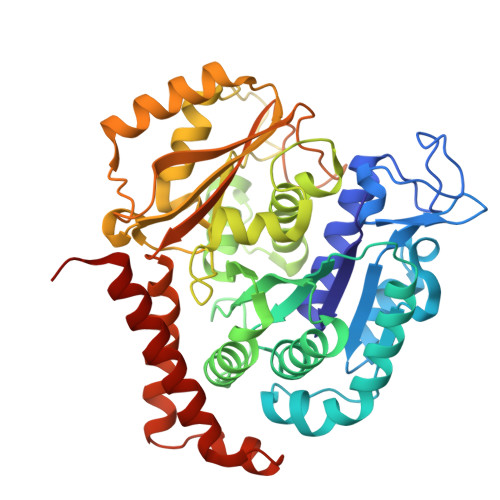
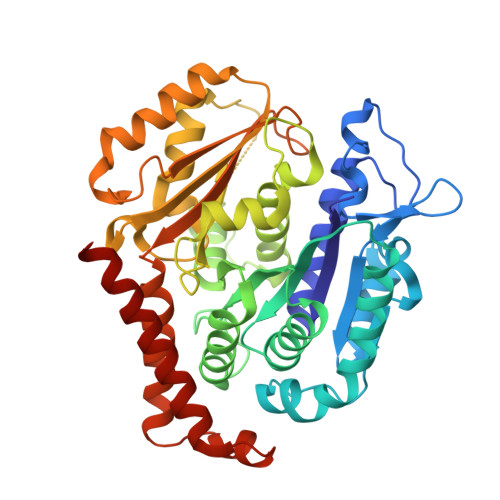
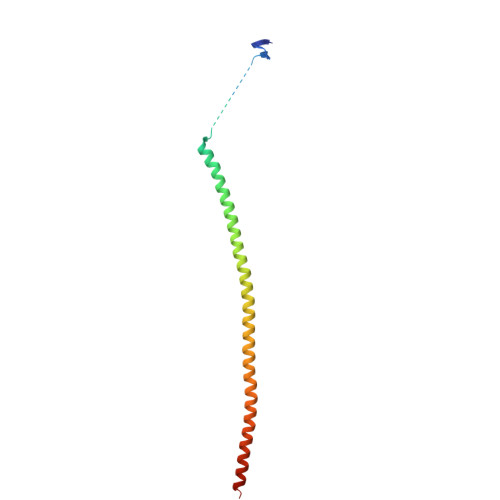
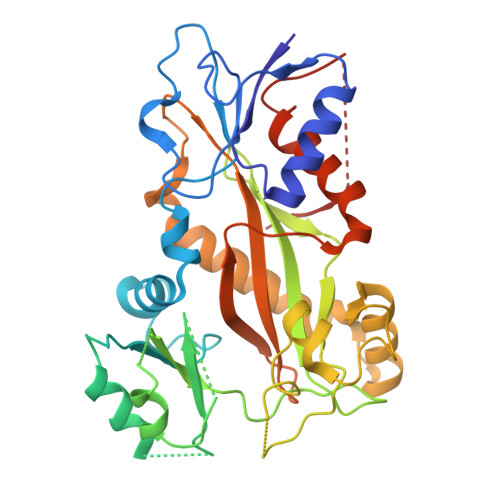
Microtubules are essential for cell division and intracellular signaling, making them well-established targets for anticancer therapy. However, the clinical utility of conventional microtubule-targeting agents is often limited by toxicity and drug resistance. SB225002, originally identified as an interleukin-8 receptor antagonist, has been reported to disrupt microtubule dynamics and exhibit anticancer activity with relatively low toxicity in preclinical studies. Yet, the structural basis of its interaction with tubulin remains poorly understood. Here, we determined the crystal structure of the SB225002-tubulin complex at 2.60 Å resolution and performed molecular dynamics simulations to characterize ligand binding, as well as drug-induced changes in tubulin structure and inter-subunit interactions. The crystal structure revealed three SB225002 molecules occupying the colchicine- and vinblastine-binding regions of tubulin. Simulations showed persistent ligand association over the simulated timescale and relatively limited overall changes in longitudinal inter-subunit interactions, whereas structural flexibility and dynamic coupling were preferentially altered at the lateral-interface-associated surface of β-tubulin. Additional simulations incorporating both lateral and longitudinal tubulin interfaces further revealed a greater reduction in lateral than in longitudinal inter-subunit contacts upon drug binding. Together, these results support a mechanism in which SB225002 preferentially perturbs lateral tubulin interactions and provide a structural framework for understanding its microtubule-modulating activity.
- School of Physical Science and Technology, Electron Microscopy Centre of Lanzhou University, Lanzhou University, Lanzhou 730000, People's Republic of China; Key Laboratory of Magnetism and Magnetic Functional Materials (Lanzhou University), Ministry of Education, Lanzhou, People's Republic of China. Electronic address: liuxy2020@lzu.edu.cn.
Organizational Affiliation: