Download Mendeley
Structural insights into the exosite-mediated activation of factor IX by factor XIa using cryogenic electron microscopy.
Mohammed, B.M., Deavila, S., Friet, T., Dattilio, I.(2026) J Thromb Haemost
- PubMed: 42628751 Search on PubMed
- DOI: https://doi.org/10.1016/j.jtha.2026.08.015
- Primary Citation Related Structures:
12BN, 9ZQY, 9ZTK, 9ZUB, 9ZUN, 9ZVX - PubMed Abstract:
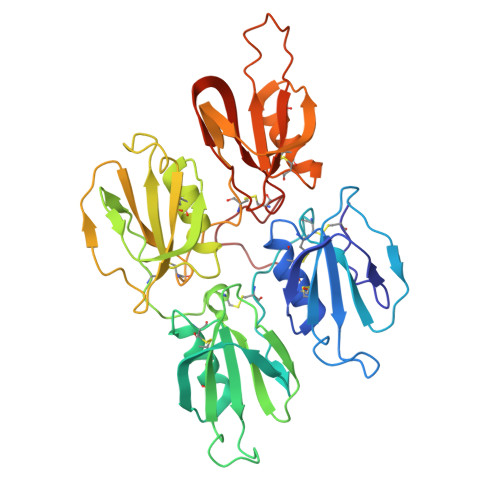
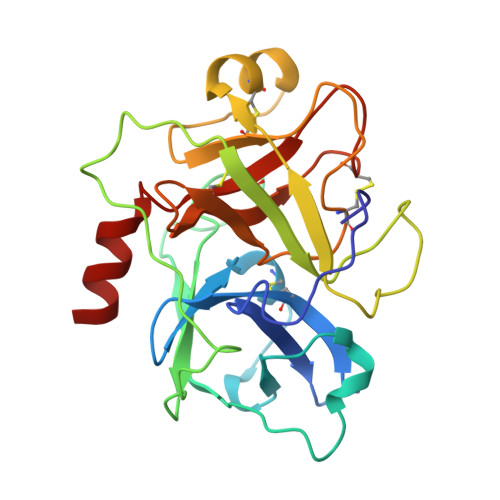
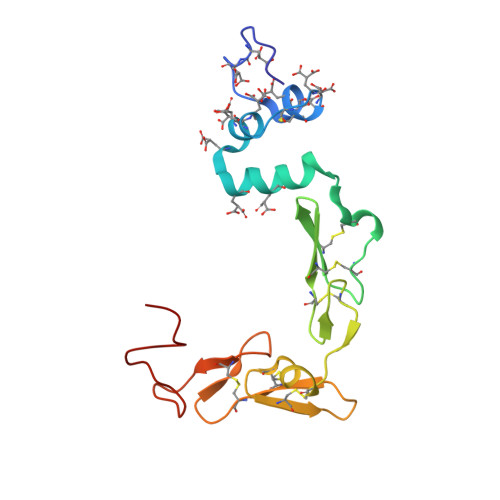
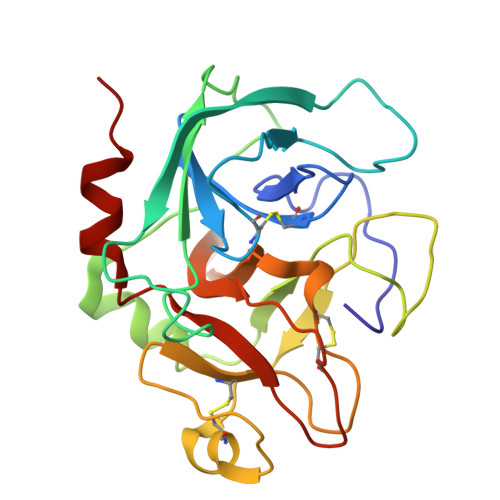
Factor (F)XI occupies a unique and clinically significant niche, bridging the tissue factor-driven and contact-driven coagulation pathways. Irrespective of the trigger, activated factor XI (FXIa) contributes to clotting by activating FIX. Biochemical studies established that this reaction requires the membrane-binding FIX-Gla domain to engage an exosite on the FXIa Apple 3 (A3) domain, which only becomes available upon FXI activation. Structural data for FXIa, FIX, FIXaβ and the FXIa:FIX complex are lacking; current understanding relies on zymogen FXI crystal structures and homology modeling of FXIa after kallikrein. Elucidate the high-resolution structure of FXIa in a functionally relevant conformation in complex with FIX. We utilized cryo-electron microscopy to determine the structures of human FXIa in complex with its full-length substrate, FIX, and activated product, FIXaβ. We report the first cryo-electron microscopy structures of FXIa in complex with its substrate, FIX, and activated FIX (FIXaβ). The structures capture a functionally relevant conformational change in the FXIa catalytic domain and reveal the first view of the entire FIX and FIXaβ. Critically, we visualize the FIX-Gla domain precisely docked to the FXIa-A3 exosite on both subunits of the FXIa dimer. We also define the first step of proteolysis, visualizing the FIX Arg145 inserted into the primary specificity pocket of FXIa. The structures define the full FXIa:FIX interface, providing a structural template for understanding the sequential activation of FIX and for developing a new class of selective allosteric antithrombotic agents.
- Edward A. Doisy Department of Biochemistry and Molecular Biology, Saint Louis University School of Medicine, St. Louis, MO 63104, USA. Electronic address: Bassem.mohammed@health.slu.edu.
Organizational Affiliation: