Download Mendeley
Primate-specific regulation of the human glycosphingolipid gatekeeper UGCG.
Wu, C., Jin, S., Xu, J., Wang, J.J., Guo, X., Li, Y., Cao, Z., Jiang, M., Yuan, Q., Hu, W., Li, C., Xu, Y., Wang, M.W., Jiang, Y., Xu, H.E.(2026) Nature
- PubMed: 42649293 Search on PubMedSearch on PubMed Central
- DOI: https://doi.org/10.1038/s41586-026-10927-4
- Primary Citation Related Structures:
26QF, 26QG, 26QH, 26QI, 26QJ, 26QM, 26QS, 26QT - PubMed Abstract:
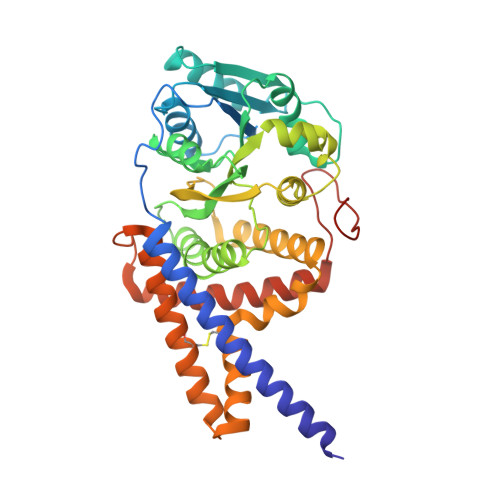
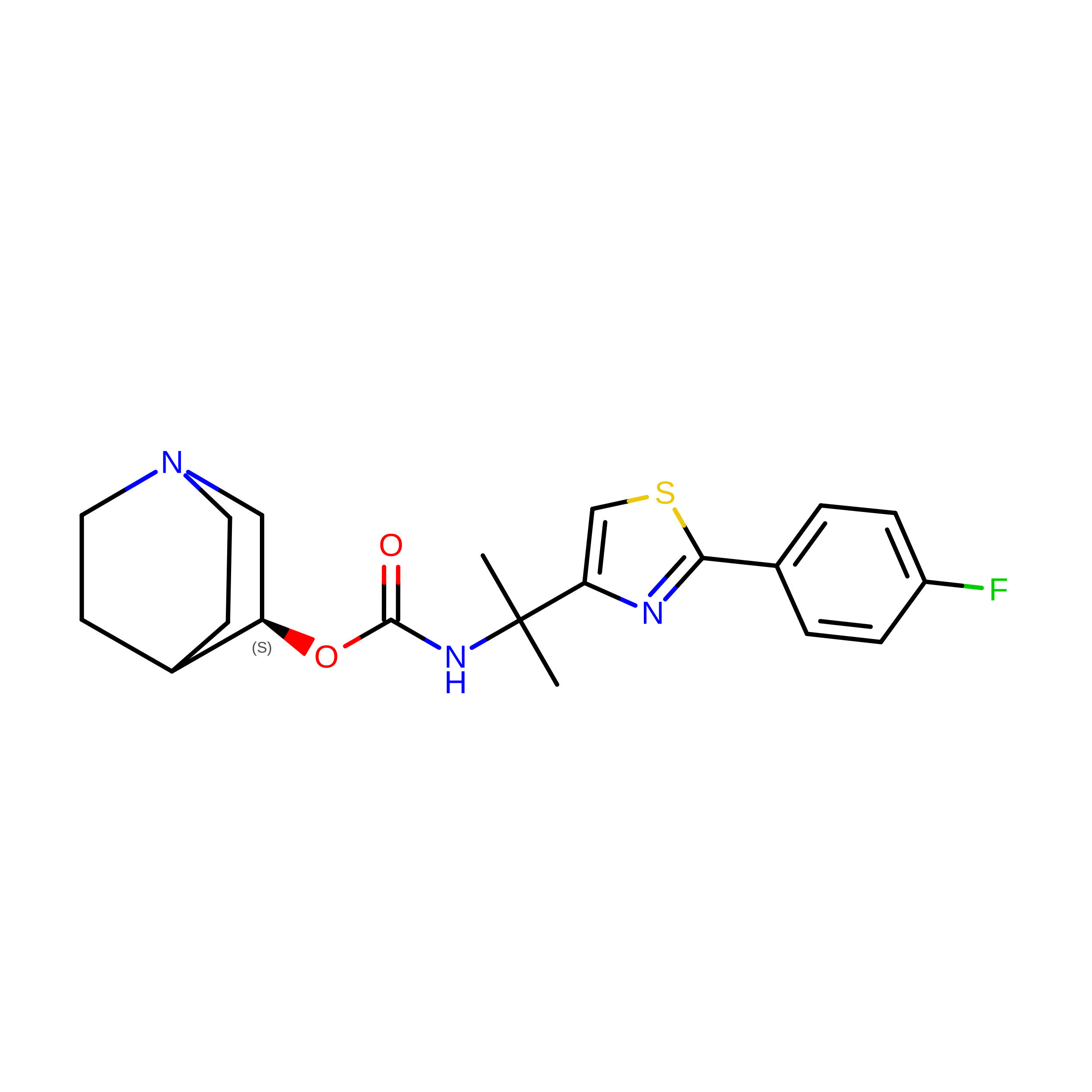
Glycosphingolipids are essential membrane components that organize lipid microdomains and orchestrate cellular signalling, differentiation and neuronal function 1-4 . In humans, these functions arise from a repertoire of several hundred glycosphingolipid species generated through stepwise glycan elaboration 5,6 . Entry into this network is controlled by a single committed reaction catalysed by UDP-glucose ceramide glucosyltransferase (UGCG), the gatekeeper that dictates the scale and composition of glycosphingolipid diversity. Despite its biological and therapeutic importance 7,8 , its mechanism and regulation have remained unknown. Here we report cryogenic electron microscopy structures of full-length human UGCG in eight functional states at 2.9-3.4 Å resolution. UGCG adopts a previously unrecognized triple-pass transmembrane architecture that anchors a GT-A core at the membrane interface and creates a bipartite active site engaging soluble and membrane-embedded substrates. Contrary to canonical GT-A enzymes, UGCG uses a metal-independent catalytic mechanism driven by an arginine network. We identify a primate-specific steric element that tunes lipid affinity and catalytic turnover, modulating glycosphingolipid entry. Structures with clinically used inhibitors reveal how this architecture governs their potency and selectivity. Together, these findings define the structural and evolutionary logic by which one enzyme controls glycosphingolipid diversity and provide a framework for precision modulation of membrane lipid homeostasis in disease.
- Research Center for Medicinal Structural Biology, National Research Center for Translational Medicine at Shanghai, State Key Laboratory of Medical Genomics, Ruijin Hospital affiliated to Shanghai Jiao Tong University School of Medicine, Shanghai, China. wcr13215@rjh.com.cn.
Organizational Affiliation: