Download Mendeley
Ferritin Iron Mineralisation: Route of Fe 3+ Transfer From the Ferroxidase Centre to the Inner Cavity of Human H-Chain Ferritin.
Bugg, Z., Bradley, J.M., Hemmings, A.M., Le Brun, N.E.(2026) Angew Chem Int Ed Engl : e1203843-e1203843
- PubMed: 42216818 Search on PubMed
- DOI: https://doi.org/10.1002/anie.1203843
- Primary Citation Related Structures:
28JY, 28JZ, 28KA, 28KB, 28KC, 28LZ - PubMed Abstract:
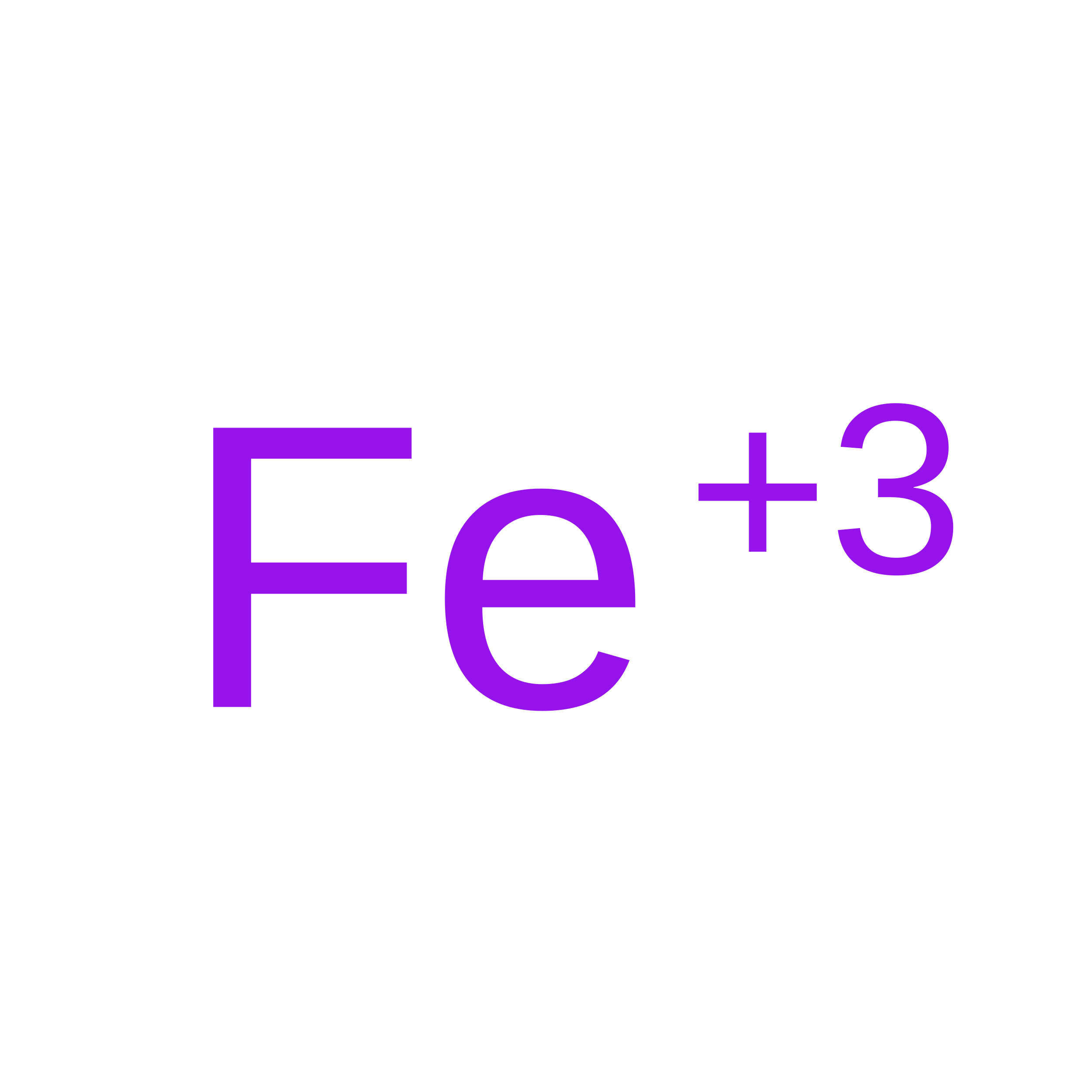
Ferritin-catalysed Fe 2+ oxidation by reaction with O 2 occurs at an intra-subunit diiron site known as the ferroxidase centre (FoC). Currently, how Fe 3+ , the key substrate for iron core nucleation/mineralisation, transfers from the FoC to the inner protein surface/central cavity where the mineral is laid down is unknown. Iron-binding sites that become occupied following exposure of anaerobic, Fe 2+ -bound human cytosolic H-chain ferritin (HuHF) to O 2 were identified by time-resolved x-ray crystallography. In addition to the two FoC iron sites, three further sites were identified, each involving Glu61 as a coordinating residue. Substitution by a non-coordinating residue (variant E61A) eliminated binding at these additional iron sites. Solution kinetic studies of Fe 2+ oxidation and iron core mineralisation in wild-type HuHF and its E61A variant showed that rapid Fe 2+ oxidation was unaffected by loss of Glu61, ruling out an important role for these sites in either guiding Fe 2+ to the FoC, or in the mechanism of FoC-catalysed Fe 2+ oxidation. Conversely, the transfer of Fe 3+ out of the FoC and core mineralisation were both severely affected in the E61A variant. A mechanism for Fe 3+ transfer from the FoC to the inner protein surface is proposed.
- Centre For Molecular and Structural Biochemistry, School of Chemistry, Pharmacy and Pharmacology, University of East Anglia, Norwich, UK.
Organizational Affiliation: