Download Mendeley
An expanded trove of fragment-bound structures for the allosteric enzyme PTP1B from computational reanalysis of large-scale crystallographic data.
Mehlman, T., Ginn, H.M., Keedy, D.A.(2024) Structure 32: 1231-1238.e4
- PubMed: 38861991
- DOI: https://doi.org/10.1016/j.str.2024.05.010
- Primary Citation of Related Structures:
7GS7, 7GS8, 7GS9, 7GSA, 7GSB, 7GSC, 7GSD, 7GSE, 7GSF, 7GSG, 7GSH, 7GSI, 7GSJ, 7GSK, 7GSL, 7GSM, 7GSN, 7GSO, 7GSQ, 7GSR, 7GST, 7GSU, 7GSV, 7GSW, 7GSX, 7GSY, 7GSZ, 7GT0, 7GT1, 7GT2, 7GT3, 7GT4, 7GT5, 7GT6, 7GT7, 7GT8, 7GT9, 7GTA, 7GTB, 7GTC, 7GTD, 7GTE, 7GTF, 7GTG, 7GTH, 7GTI, 7GTJ, 7GTK, 7GTL, 7GTM - PubMed Abstract:
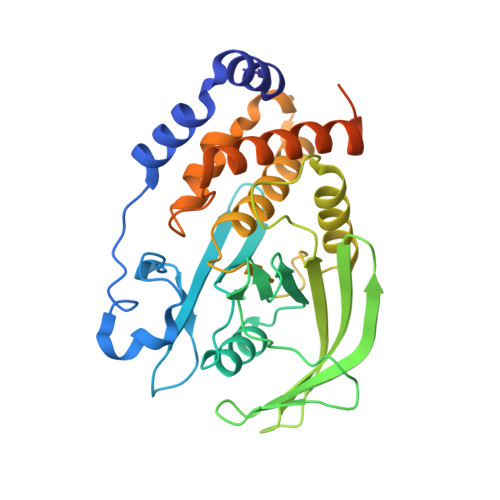
Due to their low binding affinities, detecting small-molecule fragments bound to protein structures from crystallographic datasets has been a challenge. Here, we report a trove of 65 new fragment hits for PTP1B, an "undruggable" therapeutic target enzyme for diabetes and cancer. These structures were obtained from computational analysis of data from a large crystallographic screen, demonstrating the power of this approach to elucidate many (∼50% more) "hidden" ligand-bound states of proteins. Our new structures include a fragment hit found in a novel binding site in PTP1B with a unique location relative to the active site, one that links adjacent allosteric sites, and, perhaps most strikingly, a fragment that induces long-range allosteric protein conformational responses. Altogether, our research highlights the utility of computational analysis of crystallographic data, makes publicly available dozens of new ligand-bound structures of a high-value drug target, and identifies novel aspects of ligandability and allostery in PTP1B.
- Structural Biology Initiative, CUNY Advanced Science Research Center, New York, NY 10031, USA; PhD Program in Biochemistry, CUNY Graduate Center, New York, NY 10016, USA.
Organizational Affiliation: